English
- English
- Español
- Português
- русский
- Français
- 日本語
- Deutsch
- tiếng Việt
- Italiano
- Nederlands
- ภาษาไทย
- Polski
- 한국어
- Svenska
- magyar
- Malay
- বাংলা ভাষার
- Dansk
- Suomi
- हिन्दी
- Pilipino
- Türkçe
- Gaeilge
- العربية
- Indonesia
- Norsk
- تمل
- český
- ελληνικά
- український
- Javanese
- فارسی
- தமிழ்
- తెలుగు
- नेपाली
- Burmese
- български
- ລາວ
- Latine
- Қазақша
- Euskal
- Azərbaycan
- Slovenský jazyk
- Македонски
- Lietuvos
- Eesti Keel
- Română
- Slovenski
- मराठी
- Srpski језик
China Reliable Check Valves Manufacturer
Valve Selection and Technical Specifications for Fluid Control
The Check Valve is a one-way flow control device that prevents reverse flow, protects pumps and compressors, and maintains system integrity. Xiangzheng has engineered a complete range of Check Valves for industrial, commercial, and sanitary applications. Every unit is tested in accordance with EN 12266, or ISO 5208 to ensure zero leakage at the seat and reliable long-term performance.
How a Check Valve Operates
Check Valves are automatic valves that do not require external actuation. They open when upstream pressure exceeds the cracking pressure and close when flow stops or reverses. The closing mechanism can be assisted by gravity, a spring, or a lever and weight. Xiangzheng Check Valve uses a guided disc, swing disc, or dual-plate design depending on the size, pressure class, and flow characteristics required. The disc geometry and spring force are calculated to minimize pressure drop during normal flow and to achieve rapid closure before reverse flow can develop. This prevents water hammer, protects rotating equipment, and isolates portion of a piping system during maintenance.
Common Industrial Applications
- Oil and gas production, gathering lines, and pipeline protection
- Chemical processing and petrochemical plants with aggressive fluids
- Water and wastewater treatment systems including sludge and slurry lines
- Power generation for boiler feedwater, condensate, and cooling water
- HVAC and chilled water systems to prevent backflow in risers
- Pharmaceutical and food processing with sanitary clamp or tri-clamp ends
- Marine ballast, bilge, and seawater cooling systems
- Mining slurry and tailings lines with abrasion-resistant internals
- Pulp and paper mills for liquor, steam, and condensate return
- Fire protection systems requiring reliable non-return flow control
Installation and Maintenance Considerations
Proper installation extends the service life of any Check Valve. Xiangzheng recommends installing swing Check Valve in a horizontal line with the cover facing upward, or in a vertical line with upward flow. Spring-loaded and dual-plate Check Valve can be installed in any orientation if the flow arrow on the body matches the pipeline flow direction. Always allow at least five pipe diameters of straight run upstream and two diameters downstream to reduce turbulence and uneven disc loading. For flanged connections, use correct gaskets and tighten bolts in a star pattern to the recommended torque. Before start-up, flush the line to remove weld slag, scale, and debris that could damage the seat. During operation, monitor for abnormal noise, vibration, or pressure fluctuation. Maintain a periodic inspection schedule based on cycle frequency and media aggressiveness. For high-cycle applications, inspect the spring, disc, and seat every 12 months or 50,000 cycles, whichever comes first. Replace soft seals when compression set exceeds 20 percent of original thickness. For metal-seated valves, lapping or re-machining may restore sealing performance if wear is within tolerance.
Frequently Asked Questions
Q: What is a Check Valve and why is it necessary?
A: A Check Valve allows fluid to flow in one direction and automatically closes when flow stops or reverses. This prevents backflow that can damage pumps, contaminate clean media, cause water hammer, or lead to pipe collapse under vacuum. Xiangzheng Check Valves use either a swinging disc, a spring-loaded poppet, or a dual-plate design to achieve quick closure with minimal pressure loss.
Q: How do I choose the right Check Valve for my system?
A: Start by identifying the fluid type, temperature, pressure class, and required flow rate. Then select the body material and seal material based on chemical compatibility. Consider the available installation space and connection type. For low-pressure systems, a spring-loaded Check Valve with a low cracking pressure may be ideal. For high-flow pipelines, a swing or dual-plate Check Valve offers lower pressure drop. Xiangzheng technical engineers can review your process data and recommend a model from the standard range or propose a custom design.
Q: How do I prevent water hammer with a Check Valve?
A: Water hammer occurs when a Check Valve closes too slowly or too quickly. To prevent it, use a spring-loaded or dual-plate Check Valve with a short closing stroke and a spring force matched to the system flow characteristics. Install the valve as close as possible to the pump discharge or the source of reverse flow. Avoid oversizing the valve, which can cause the disc to flutter. For long pipelines, consider using a nozzle or a dashpot-assisted Check Valve to achieve controlled closure. Xiangzheng can provide dynamic analysis to determine the correct closure time for your specific pipeline.
Q: What materials are available for corrosive media?
A: Xiangzheng offers Check Valve in stainless steel 316, duplex stainless steel, Alloy 20, Hastelloy C276, Monel 400, Inconel 625, and titanium. Seal materials include PTFE, RPTFE, PEEK, Devlon, and metal-to-metal combinations. For strong acids such as sulfuric or hydrochloric acid, Alloy 20 or Hastelloy bodies with PTFE seals provide excellent resistance. For seawater and chloride environments, duplex stainless steel or titanium with RPTFE seals is recommended. Always provide the full chemical composition, concentration, and temperature to ensure correct material selection.
Q: What is the difference between a swing Check Valve and a spring Check Valve?
A: A swing Check Valve uses a hinged disc that swings open with forward flow and swings closed by gravity or reverse flow. It offers low pressure drop and is suitable for large pipe sizes, but it requires sufficient flow velocity to fully open and may chatter under low flow. A spring Check Valve uses a spring-loaded poppet or disc that opens when pressure overcomes the spring force and closes automatically when flow stops. It provides faster, more controlled closure and can be installed in any orientation. Spring Check Valves are better for preventing water hammer and for applications with pulsating flow.
Q: How often should a Check Valve be inspected?
A: Inspection frequency depends on the operating conditions. For clean, non-corrosive fluids at moderate temperatures, an annual visual inspection and functional test are usually sufficient. For abrasive, corrosive, or high-cycle applications, inspect the valve every six months. During inspection, remove the cover or access plate and check the disc, hinge pin, spring, and seat for wear, corrosion, or fouling. Replace any component that shows signs of deep pitting, deformation, or loss of sealing contact. For critical services, consider installing a pressure gauge or acoustic sensor to monitor reverse flow and detect early signs of leakage.
- View as
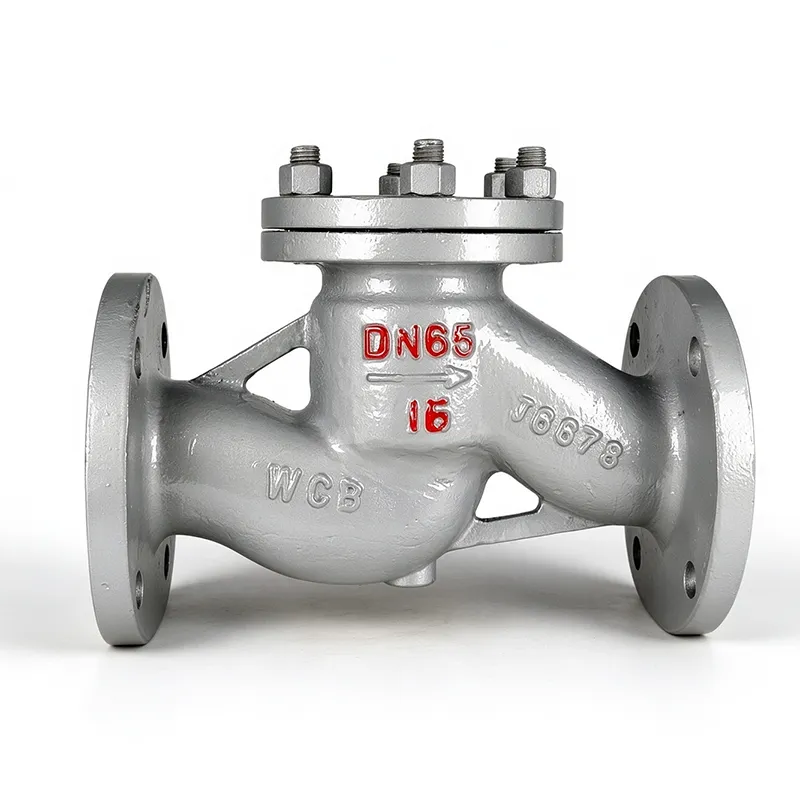
ASTM A216 WCB Flanged Lift Check Valve
Xiangzheng is a reliable China factory and manufacturer specializing in the production of high-quality ASTM A216 WCB Flanged Lift Check Valve. Our factory focuses on stable casting quality, accurate machining, pressure testing and export support. Designed to prevent reverse flow and protect equipment, our WCB lift check valves are suitable for oil, gas, water, steam and industrial applications with competitive factory pricing.
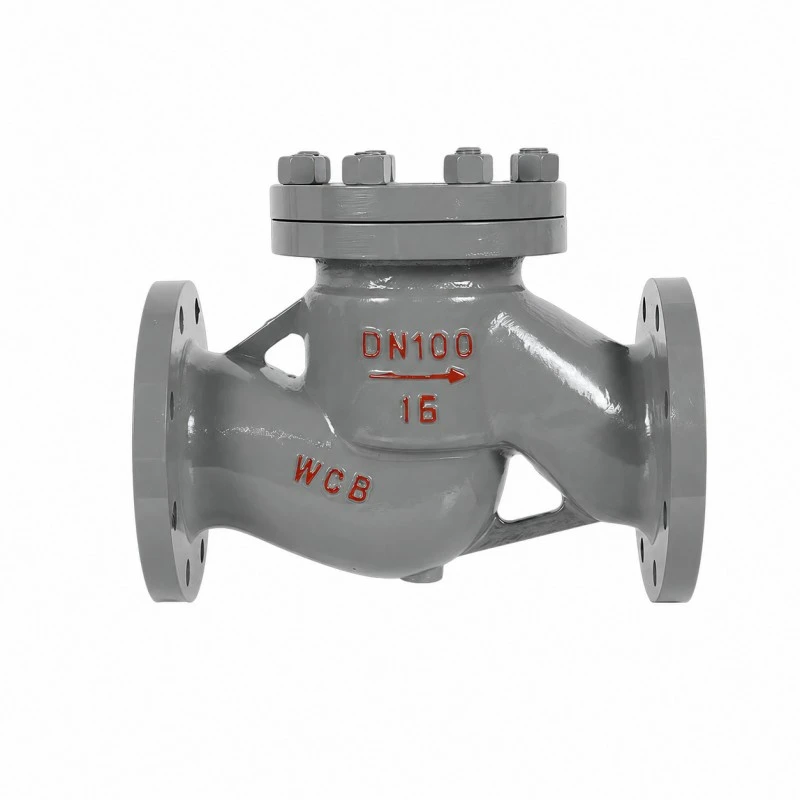
WCB Lift Check Valve Class 300
Welcome to Xiangzheng, your reliable supplier for bulk WCB Lift Check Valve Class 300 requirements. With over a decade of manufacturing experience, we offer fast lead times and consistent excellence.
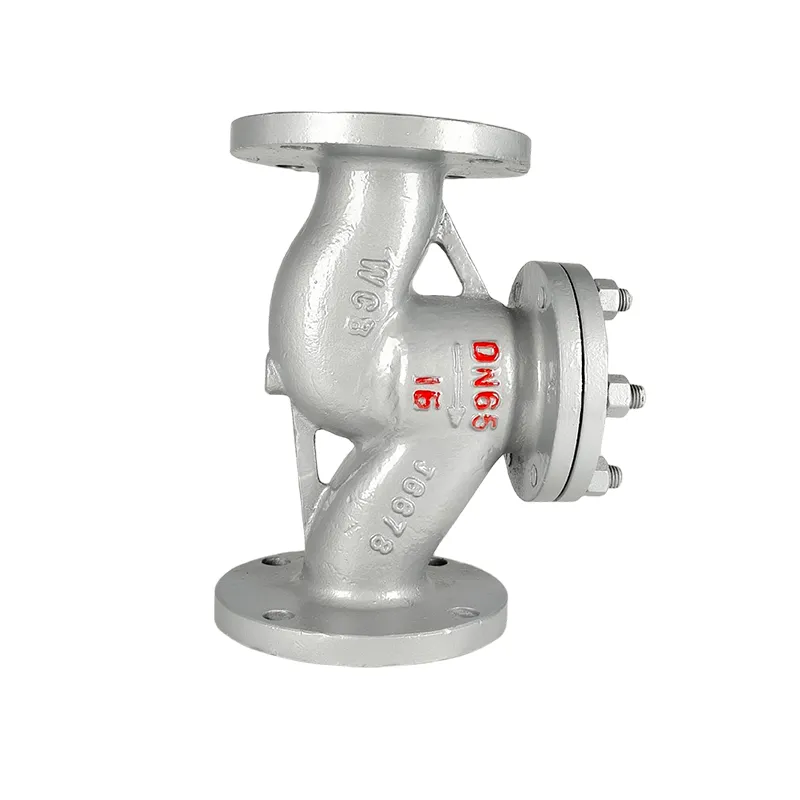
CS ASME B16.34 Lift Check Valve
Xiangzheng is an experienced China factory, manufacturer, and global supplier of CS ASME B16.34 Lift Check Valve, providing industrial valve solutions for distributors, contractors and end users worldwide. We support custom specifications, private labeling, and bulk production, helping buyers reduce sourcing risks and total costs. Send us your requirements now and receive free samples and expert advice from our manufacturing team.
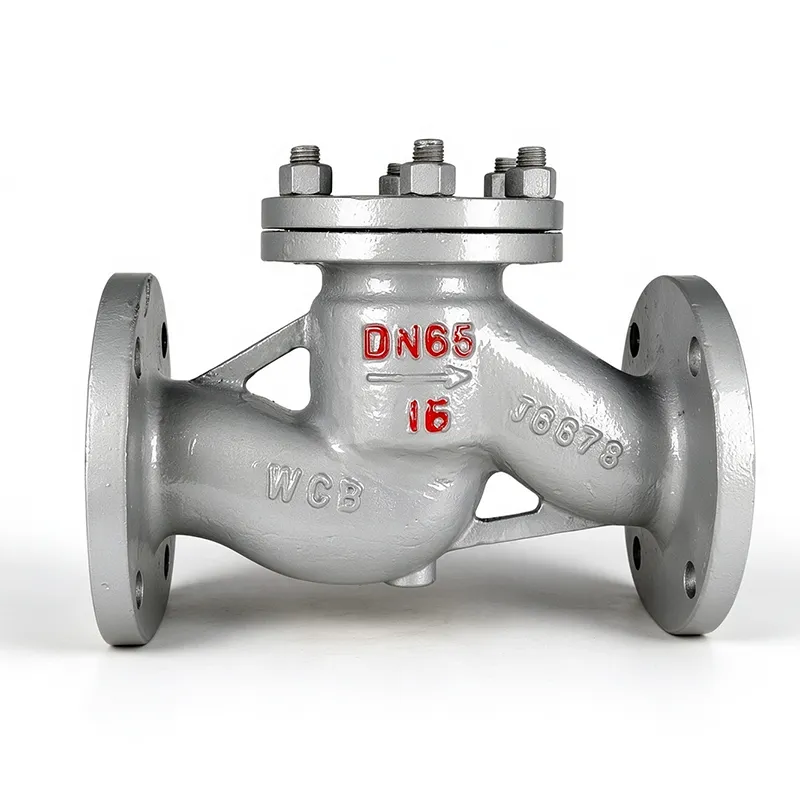
Carbon Steel Lift Check Valve Class 600
Xiangzheng Valve Co., Ltd is a professional China manufacturer and supplier of Carbon Steel Lift Check Valve Class 600, providing reliable industrial valve solutions for distributors, engineering contractors and end users worldwide. With advanced production equipment, experienced engineers and strict quality inspection procedures.
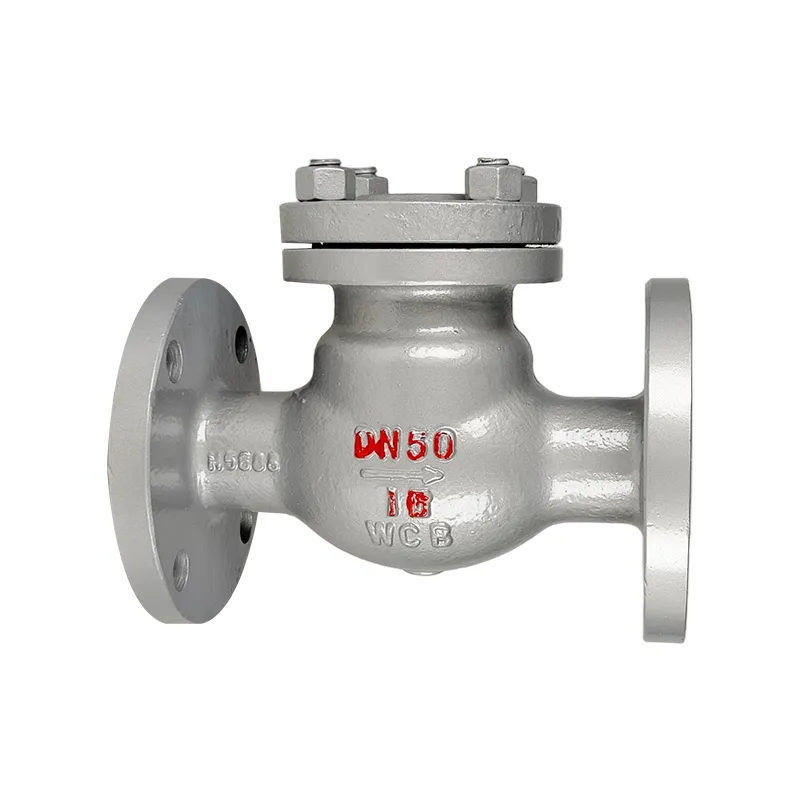
ASTM A216 WCB Flanged Swing Check Valve
Xiangzheng ASTM A216 WCB Flanged Swing Check Valve is designed for large pipeline systems requiring stable flow direction and low pressure loss, our swing check valves offer durable performance and competitive factory prices. Contact us today for quotation, technical support and customized solutions.
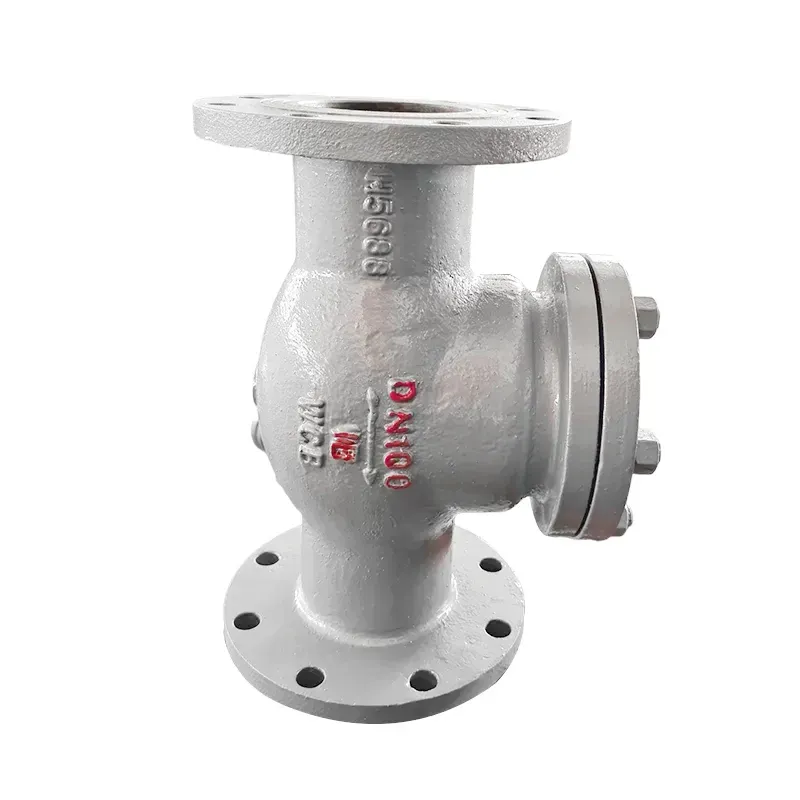
ASME B16.34 Carbon Steel Flanged Swing Check Valve
As a trusted China manufacturer and supplier, Xiangzheng offering ASME B16.34 Carbon Steel Flanged Swing Check Valve for distributors, EPC contractors and global engineering projects. With modern manufacturing facilities, skilled production teams and complete inspection procedures, our factory provides stable quality products and flexible supply support for different industrial applications.
Xiangzheng offers dependable Check Valves for industrial projects. Contact our team for a quote.
News Recommendations